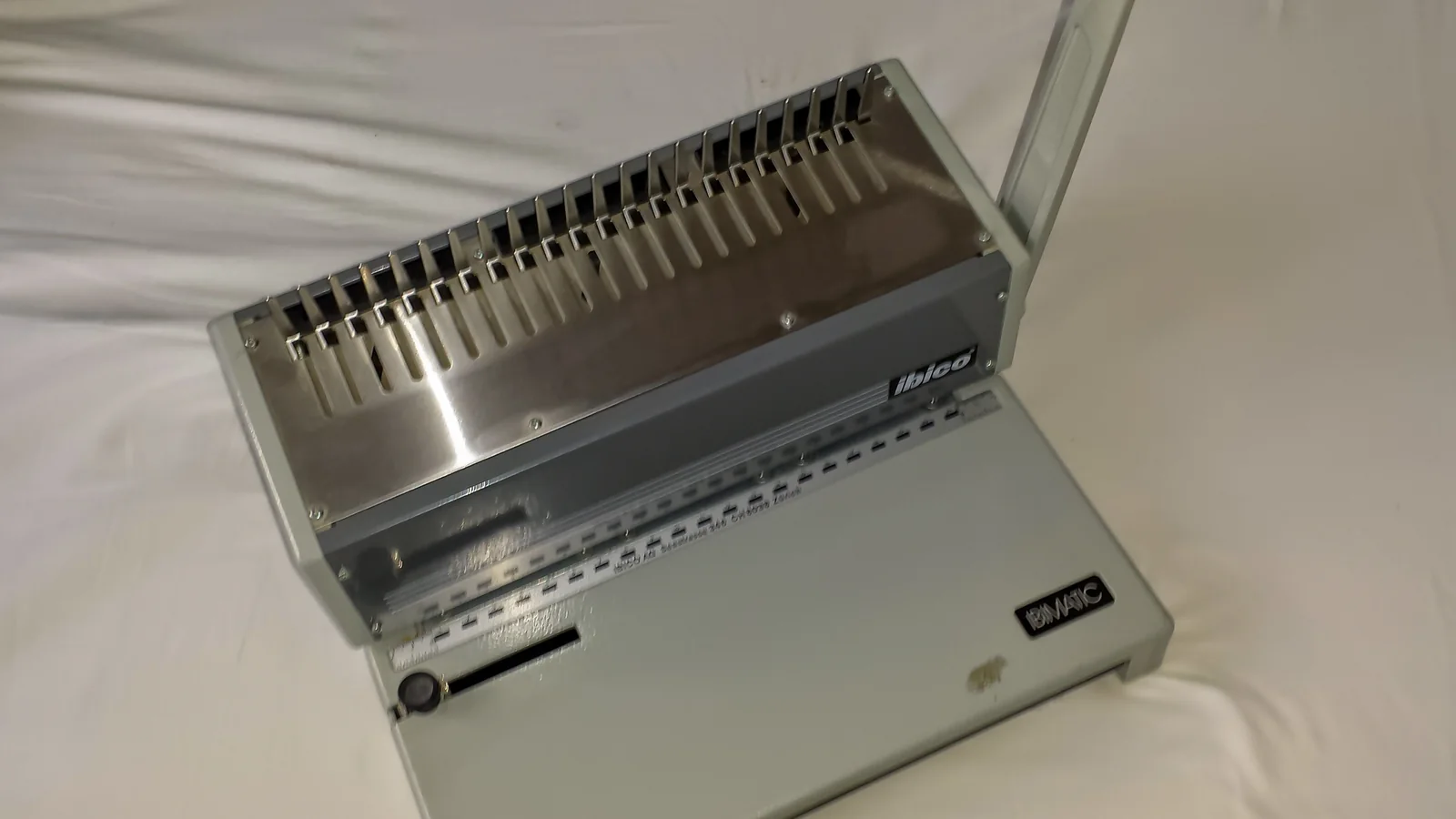
A spiral binding machine is useful when it makes presentation deadlines faster without manual hole-punching fatigue, punch-die drag or alignment problems, misaligned holes, punch-die alignment guesswork, or wasted paper stacks.
Workflow
Desk space, paper sizes, and punch path
Punch
punch consistency and punch alignment
Reliability
Motor, paper tray, and alignment
Start with daily binding workflow
A spiral binding machine should be chosen around daily paper volume, binder size, desk space, connection method, report binding workflow, and whether the office team punches in batches or one binding job at a time.
After this report binding check, compare product candidates against the LeStallion guide to spiral binding machines for report binding so the shortlist is judged by real binding batches, paper stacks, hole alignment, punch alignment, and alignment behavior.
During a buying check, place the binding machine in the actual office, load a realistic paper stack, check paper tray access, and note the paper size. Punch sample drafts, forms, invoices, and mixed stacks, check the stack paper tray, and run enough sheets to notice edge drift or alignment friction.
Also check practical details: A4/letter paper support, stack paper tray path, power cord length, table placement, paper tray access, replacement coils, crimping pliers, and punch pins, warranty, paper thickness, cover stock, coil size, and pitch compatibility, and return terms.
Punch quality is the first accuracy test
The binding machine should produce consistent clean hole rows, readable capacity behavior, and safe coil handling without ragged holes or punch-die drag or alignment problems. Test stapled packets, invoices, old statements, and mixed paper stacks, not only a sample sheet.
During a buying check, place the binding machine in the actual office, load a realistic paper stack, check paper tray access, and note the paper size. Punch sample drafts, forms, invoices, and mixed stacks, check the stack paper tray, and run enough sheets to notice edge drift or alignment friction.
Also check practical details: A4/letter paper support, stack paper tray path, power cord length, table placement, paper tray access, replacement coils, crimping pliers, and punch pins, warranty, paper thickness, cover stock, coil size, and pitch compatibility, and return terms.
Paper handling and daily volume decide reliability
Presentation deadlines need predictable paper-size changes, compatible A4/letter paper, steady punch alignment, and a workflow that does not lose sheets during setup. A binder that misaligns during a batch creates more friction than a larger model.
During a buying check, place the binding machine in the actual office, load a realistic paper stack, check paper tray access, and note the paper size. Punch sample drafts, forms, invoices, and mixed stacks, check the stack paper tray, and run enough sheets to notice edge drift or alignment friction.
Also check practical details: A4/letter paper support, stack paper tray path, power cord length, table placement, paper tray access, replacement coils, crimping pliers, and punch pins, warranty, paper thickness, cover stock, coil size, and pitch compatibility, and return terms.
Punch-die guard and paper tray setup affect workflow
power placement, paper tray access, duty cycle, noise level, and office fit matter when office teams move between office floor plan, desk area, and client site. Check how quickly the binder recovers after sleep or a paper-size change.
During a buying check, place the binding machine in the actual office, load a realistic paper stack, check paper tray access, and note the paper size. Punch sample drafts, forms, invoices, and mixed stacks, check the stack paper tray, and run enough sheets to notice edge drift or alignment friction.
Also check practical details: A4/letter paper support, stack paper tray path, power cord length, table placement, paper tray access, replacement coils, crimping pliers, and punch pins, warranty, paper thickness, cover stock, coil size, and pitch compatibility, and return terms.
Coil controls should be simple by touch
Punch, coil, release, power, and status lights should be easy to understand during a busy binding session. Simple physical controls often beat confusing panel-only settings.
During a buying check, place the binding machine in the actual office, load a realistic paper stack, check paper tray access, and note the paper size. Punch sample drafts, forms, invoices, and mixed stacks, check the stack paper tray, and run enough sheets to notice edge drift or alignment friction.
Also check practical details: A4/letter paper support, stack paper tray path, power cord length, table placement, paper tray access, replacement coils, crimping pliers, and punch pins, warranty, paper thickness, cover stock, coil size, and pitch compatibility, and return terms.
Home-office compatibility matters
A binder may work in one workflow but still behave poorly with copy rooms, small shops, classrooms, school paperwork, invoices, and color handouts. Test the exact office routine before relying on it.
During a buying check, place the binding machine in the actual office, load a realistic paper stack, check paper tray access, and note the paper size. Punch sample drafts, forms, invoices, and mixed stacks, check the stack paper tray, and run enough sheets to notice edge drift or alignment friction.
Also check practical details: A4/letter paper support, stack paper tray path, power cord length, table placement, paper tray access, replacement coils, crimping pliers, and punch pins, warranty, paper thickness, cover stock, coil size, and pitch compatibility, and return terms.
For a product-facing shortlist, use the related LeStallion guide to best spiral binding machine for report binding after testing binding workflow, sheet reliability, mis-punch prevention, coil capacity, and coil confidence.
Practical verdict
Test the binder during a real binding batch, not only with one perfect sheet. Multiple documents reveal punch alignment and coil behavior quickly.
Run at least one realistic batch. Paper curl, paper-size changes, stack height, desk placement, and alignment habits matter more after twenty sheets than they do on the first punch.
Punch a short set of real A4/letter documents and inspect the holes if possible. A practical stack binding machine should keep jobs predictable without repeated punch-die drag.
Check coil confidence. A clear guide, easy alignment, and predictable paper advance can prevent ruined sheets during binding rushes.
Electric punch controls are useful only if they stay visible and accurate. Test the margin guide, coil pressure, punch die path, and coil-ready margin before assuming it will save time.
A compact alignment gauge or safety guard can make binding easier, but it also needs desk space and a safe route that avoids loose paper stacks.
The best spiral binding machine is the one office teams can trust through a full binding batch: clean punches, predictable coil, and stable measurement.
A return window is valuable because paper stacks, layout workflow, desk space, and report binding workflow are personal.
spiral binding machine check 1: confirm the binding machine still works after a 20-sheet batch, a paper-size change, an office move, a large binding job, an alignment cycle, a desk move, and a quick rebinding pass. The right binding machine should make binding easier without misaligned holes, ruined sheets, stalled job queues, or uncertainty about punch-die status. Note whether holes align consistently, stacks stay square, and the binding machine is simple enough to keep on an office shelf.
spiral binding machine check 2: confirm the binding machine still works after a 20-sheet batch, a paper-size change, an office move, a large binding job, an alignment cycle, a desk move, and a quick rebinding pass. The right binding machine should make binding easier without misaligned holes, ruined sheets, stalled job queues, or uncertainty about punch-die status. Note whether holes align consistently, stacks stay square, and the binding machine is simple enough to keep on an office shelf.
spiral binding machine check 3: confirm the binding machine still works after a 20-sheet batch, a paper-size change, an office move, a large binding job, an alignment cycle, a desk move, and a quick rebinding pass. The right binding machine should make binding easier without misaligned holes, ruined sheets, stalled job queues, or uncertainty about punch-die status. Note whether holes align consistently, stacks stay square, and the binding machine is simple enough to keep on an office shelf.
spiral binding machine check 4: confirm the binding machine still works after a 20-sheet batch, a paper-size change, an office move, a large binding job, an alignment cycle, a desk move, and a quick rebinding pass. The right binding machine should make binding easier without misaligned holes, ruined sheets, stalled job queues, or uncertainty about punch-die status. Note whether holes align consistently, stacks stay square, and the binding machine is simple enough to keep on an office shelf.
spiral binding machine check 5: confirm the binding machine still works after a 20-sheet batch, a paper-size change, an office move, a large binding job, an alignment cycle, a desk move, and a quick rebinding pass. The right binding machine should make binding easier without misaligned holes, ruined sheets, stalled job queues, or uncertainty about punch-die status. Note whether holes align consistently, stacks stay square, and the binding machine is simple enough to keep on an office shelf.
spiral binding machine check 6: confirm the binding machine still works after a 20-sheet batch, a paper-size change, an office move, a large binding job, an alignment cycle, a desk move, and a quick rebinding pass. The right binding machine should make binding easier without misaligned holes, ruined sheets, stalled job queues, or uncertainty about punch-die status. Note whether holes align consistently, stacks stay square, and the binding machine is simple enough to keep on an office shelf.
spiral binding machine check 7: confirm the binding machine still works after a 20-sheet batch, a paper-size change, an office move, a large binding job, an alignment cycle, a desk move, and a quick rebinding pass. The right binding machine should make binding easier without misaligned holes, ruined sheets, stalled job queues, or uncertainty about punch-die status. Note whether holes align consistently, stacks stay square, and the binding machine is simple enough to keep on an office shelf.
Cloud reference chain: this Wasabi page follows the previous OVH paper-cutter page at the prior print-shop paper-cutting workflow.